PPR vs PVC Pipes: Which One Should You Choose?
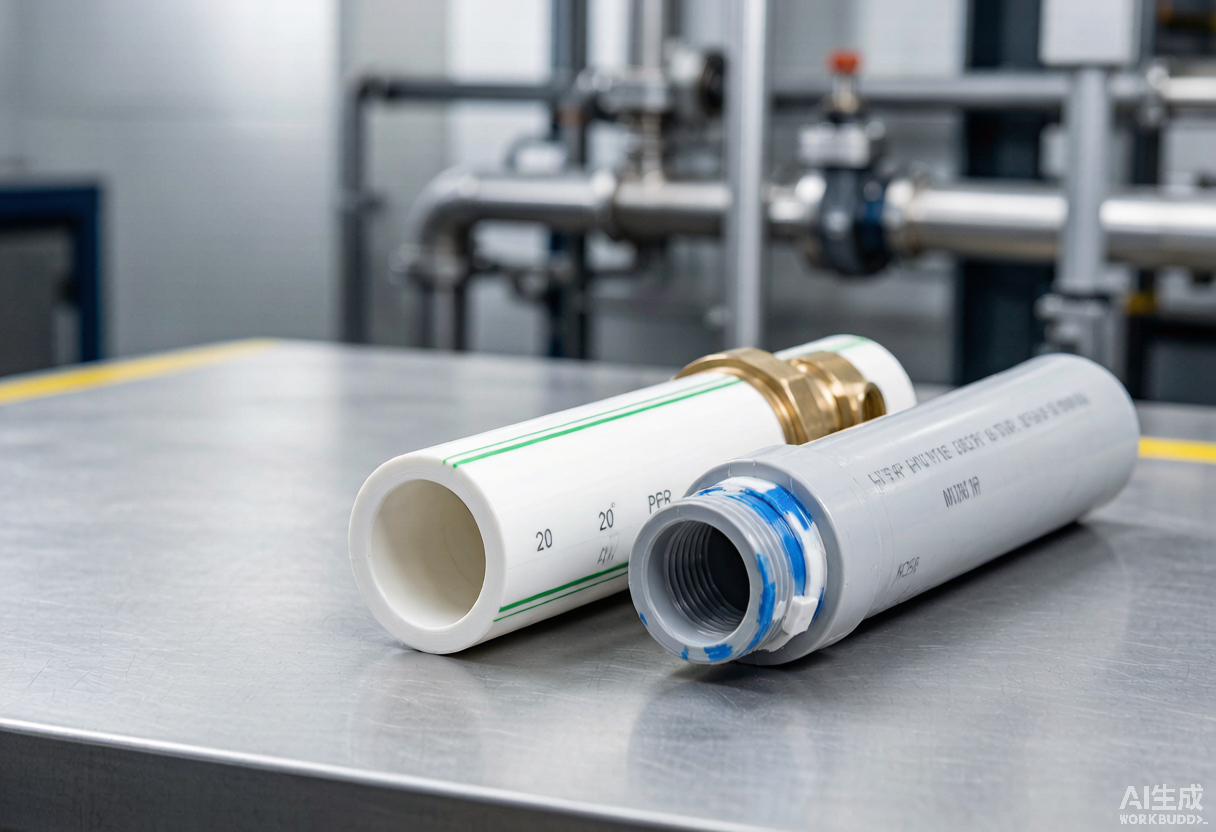
PPR and PVC are the most popular plastic pipes for water systems. Compare temperature resistance, pressure ratings, joining methods and applications to pick the right pipe.
Introduction
PPR and PVC pipes dominate modern plumbing and water supply systems. Both are affordable, corrosion-resistant and easy to work with, but they are engineered for different jobs.
This guide compares PPR and PVC across material properties, temperature limits, joining methods, durability and cost, so you can choose the right pipe for your project.
What Is PPR Pipe?
PPR (Polypropylene Random Copolymer) is a thermoplastic pipe introduced in Europe in the 1980s. It is the standard material for domestic hot and cold water supply in China, Europe and much of Asia.
Key properties:
- Temperature rating: up to 70°C continuous (95°C peaks)
- Joined by heat fusion — joints are as strong as the pipe itself
- Low thermal conductivity — reduces heat loss and condensation
- Excellent chemical resistance
What Is PVC Pipe?
PVC (Polyvinyl Chloride) is one of the most widely used plastics in construction. PVC-U (unplasticized) is used for drainage, water supply and electrical conduit.
Key properties:
- Temperature rating: up to 60°C (drainage) — not for hot water supply
- Joined by solvent cement (glue)
- Very stiff and strong for its cost
- Excellent UV resistance in properly formulated outdoor grades
PPR vs PVC: Key Differences
| Feature | PPR | PVC |
|---|---|---|
| Hot water | ✅ Up to 70°C | ❌ Max ~60°C |
| Cold water | ✅ | ✅ |
| Joining | Heat fusion | Solvent cement |
| Joint strength | Very high (fused) | High (cemented) |
| Flexibility | Moderate | Low (stiff) |
| UV resistance | Poor (needs shielding) | Good |
| Drinking water | Common choice | Use potable-grade only |
| Cost | Slightly higher | Very low |
Which Pipe Should You Choose?
Choose PPR when:
- The system carries hot water (bathrooms, kitchens, heating)
- You want permanent, leak-free joints that never need re-tightening
- You need low heat loss and no condensation on cold lines
Choose PVC when:
- The system is cold-water supply or drainage
- Pipes run outdoors and need UV resistance
- Budget is the primary constraint
- You need conduit or drainage in buildings
Installation Tips
- PPR: use a fusion welding machine at the correct temperature (260°C); hold the joint for the recommended cooling time before pressurizing
- PVC: clean and prime surfaces before applying solvent cement; allow full cure time (24 hours) before pressure testing
- Support both pipe types every 1–1.5 meters on horizontal runs
- Always pressure-test new installations before burying or covering
Conclusion
PPR and PVC are not competitors in most real projects — they are complementary. Use PPR for hot and cold potable water lines, and PVC for drainage, cold supply and outdoor conduit. Match the pipe to the temperature and duty, and your system will last decades.
Frequently Asked Questions
Can PPR pipes be used for hot water?▾
Yes. PPR pipes are rated for continuous hot water up to 70°C (and peaks to 95°C), which is why they are the standard for domestic hot and cold water systems.
Is PVC pipe safe for drinking water?▾
PVC-U is commonly used for cold water supply and drainage, but for drinking water you should use pipes certified for potable water (NSF/ANSI 61 or WRAS). PPR is generally preferred for drinking water lines in many countries.
What is the difference between PPR and PVC joining?▾
PPR pipes are joined by heat fusion — the pipe and fitting are melted and fused into one piece, creating permanent leak-free joints. PVC pipes are joined with solvent cement, which chemically welds the joint.
Which pipe is stronger, PPR or PVC?▾
For pressure ratings at room temperature they are comparable, but PPR retains strength at higher temperatures and is more flexible, while PVC is stiffer and more resistant to sunlight (UV) when properly formulated.