Ball Valve vs Gate Valve: Key Differences and How to Choose
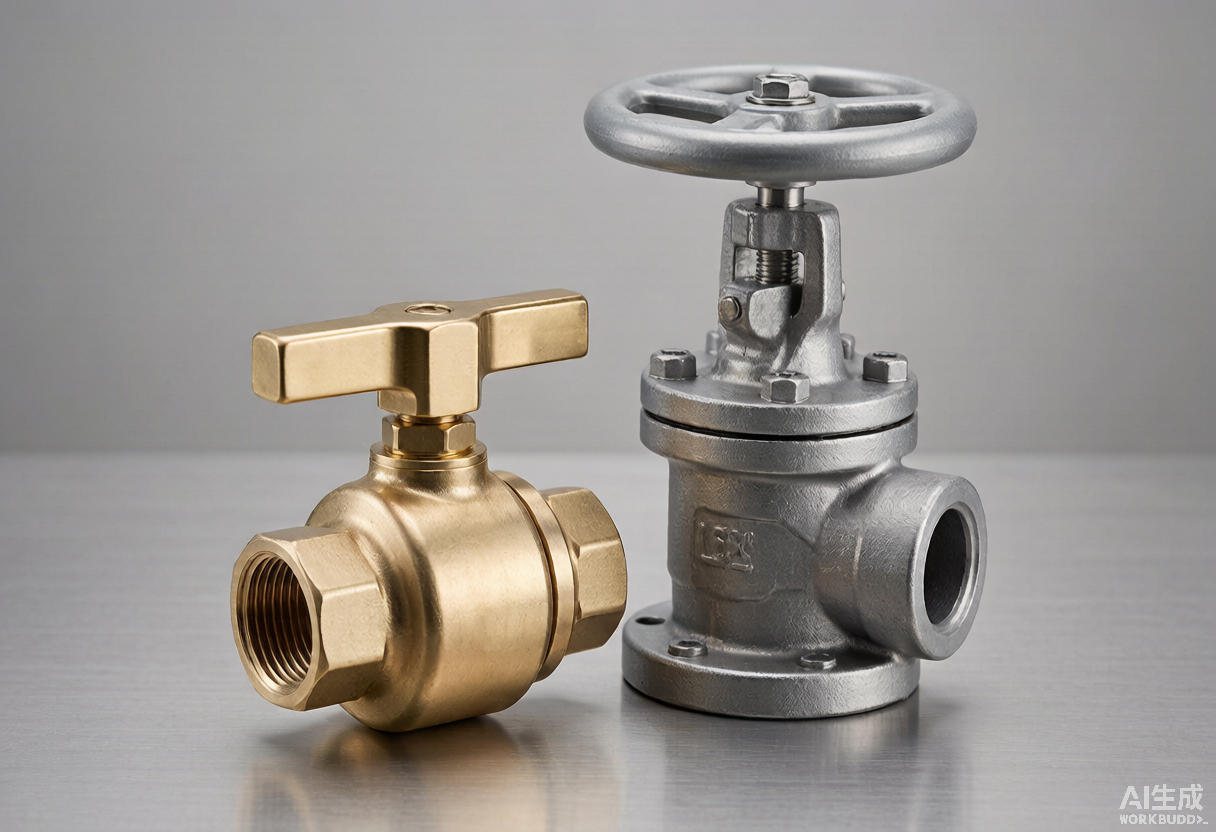
Ball valves and gate valves are the two most common shut-off valves in piping systems. This guide compares their working principles, advantages, limitations and helps you choose the right one.
Introduction
Ball valves and gate valves are the two most widely used shut-off valves in residential, commercial and industrial piping systems. Although both are designed to stop or allow flow, they work in completely different ways and excel in different situations.
This guide compares ball valves and gate valves across working principle, pressure drop, speed of operation, sealing performance, maintenance and cost — so you can make an informed choice for your project.
What Is a Ball Valve?
A ball valve uses a hollow, perforated sphere (the ball) to control flow. When the handle is turned 90 degrees, the ball rotates so the hole aligns with the pipe (open) or faces away from it (closed). Because a quarter turn fully opens or closes the valve, ball valves are called "quarter-turn valves".
How Ball Valves Work
The ball sits between two seats, usually made of PTFE (Teflon). Turning the stem rotates the ball. In the open position, flow passes straight through the bore with very little resistance. In the closed position, the solid face of the ball blocks the passage completely, creating a bubble-tight seal.
What Is a Gate Valve?
A gate valve controls flow by lifting a flat or wedge-shaped gate out of the path of the fluid. The gate moves perpendicular to the flow direction, operated by a threaded stem and a handwheel. Turning the wheel many times raises or lowers the gate.
How Gate Valves Work
In the fully open position, the gate is completely withdrawn into the bonnet, leaving a clear, unobstructed path. This gives gate valves the lowest pressure drop of any valve type when fully open. In the closed position, the gate is lowered into contact with the seats, sealing the flow.
Ball Valve vs Gate Valve: Key Differences
| Feature | Ball Valve | Gate Valve |
|---|---|---|
| Operation | Quarter turn (90°) | Multiple turns of handwheel |
| Opening speed | Fast | Slow |
| Pressure drop (open) | Low | Very low (lowest) |
| Sealing | Bubble-tight | Good, but can leak at low pressure |
| Throttling | Not recommended | Not recommended |
| Maintenance | Low | Higher (packing, seats) |
| Space requirement | Compact | Long body, needs clearance |
| Typical sizes | Up to 12" common | Large mains, up to 48"+ |
Advantages of Ball Valves
- Quick operation: one quarter turn to open or close, ideal for emergencies
- Reliable sealing: PTFE seats provide bubble-tight shut-off even after years
- Low maintenance: fewer moving parts exposed to the fluid
- Compact design: shorter face-to-face dimension saves space
- Bidirectional: can be installed in either direction in most designs
Advantages of Gate Valves
- Minimum pressure drop: full bore when open, ideal for high-flow lines
- Better for large diameters: cost-effective in sizes above 4-6 inches
- Gentle on flow: no sudden changes in flow direction
- Long service life when used correctly: only operated fully open or closed
Applications
Ball valves are best for:
- Residential water shut-off
- Gas lines and fire protection
- Chemical and sanitary processes
- Frequent on/off cycling
Gate valves are best for:
- Large water mains and distribution networks
- Oil and gas pipelines
- Applications requiring minimal flow resistance
- Infrequent, fully open/closed service
Which Valve Should You Choose?
Choose a ball valve for most residential, commercial and general industrial shut-off needs — it is faster, seals better and needs less upkeep.
Choose a gate valve when you need the lowest possible pressure drop in a large-diameter line and the valve will rarely be operated.
Conclusion
Both valves have their place. For quick, reliable shut-off, a ball valve is usually the smarter and cheaper choice. For big pipelines where flow efficiency is paramount, a gate valve remains the industry standard. Match the valve to the duty, and your system will perform reliably for decades.
Frequently Asked Questions
Which is better, a ball valve or a gate valve?▾
For most residential and industrial shut-off applications, a ball valve is better because it operates with a quick 90-degree turn, provides a reliable bubble-tight seal and requires little maintenance. Gate valves are preferred mainly where minimal pressure drop in the fully open position matters most, such as large water mains.
Can a gate valve be used for throttling?▾
No. Gate valves should only be used fully open or fully closed. Using a gate valve to throttle flow causes vibration, noise and erodes the seat and disc, leading to premature failure.
Why do ball valves fail after sitting for years?▾
Ball valves that are rarely operated can seize because the ball and seats dry out or scale builds up. Operating the handle periodically and using a valve with PTFE seats helps maintain smooth operation.
Are ball valves more expensive than gate valves?▾
In small sizes (up to 2"), brass ball valves are usually comparable or slightly more expensive than gate valves, but the gap has narrowed. In larger sizes, wafer-type valves are often more economical.